
The Appraisal and Item Evaluation Process
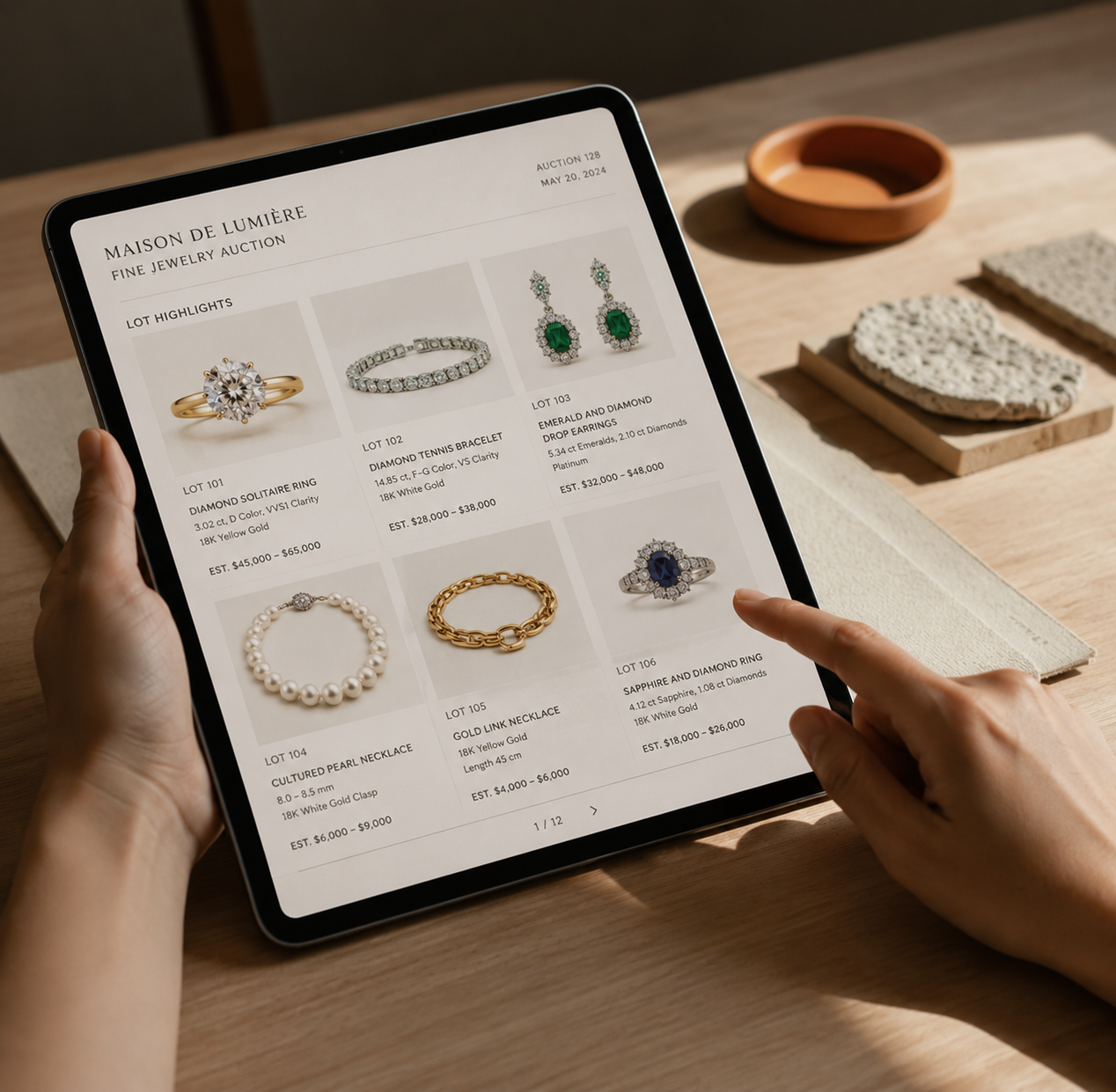

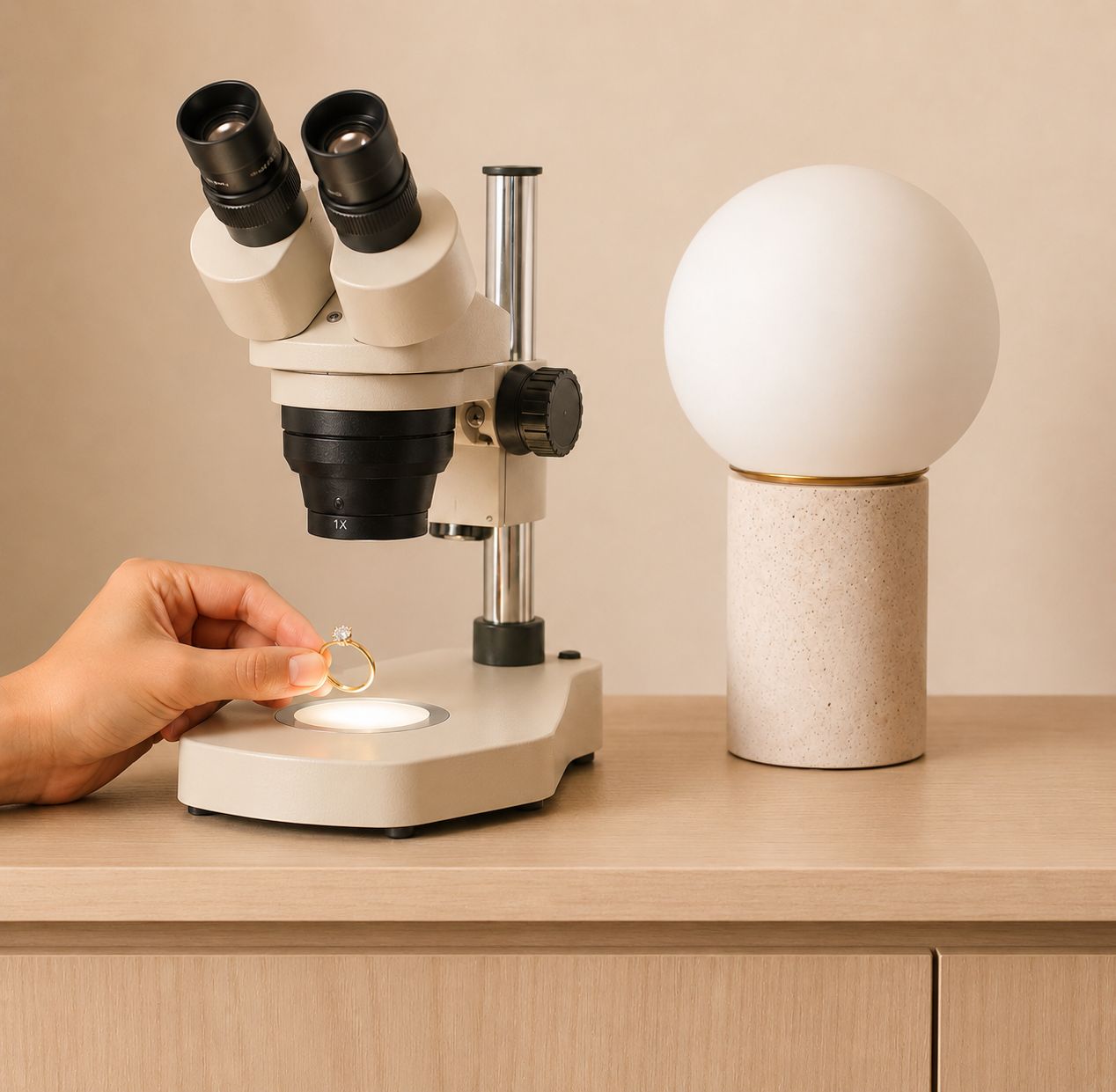

Your jewelry is examined using appropriate gemological and appraisal methods. This may include measuring, weighing, testing, plotting when required or requested, and photographic documentation. Gemstone colors are rated against standards. If needed, recommendations to send items to the GIA lab may be made.
Consultation and Defining the Engagement
We begin by identifying the intended use of the appraisal and defining the scope of work. Fees, timing, and terms are discussed and confirmed in a written engagement agreement before work begins.
Examination,Testing and Grading
After a closing discussion to review the appraisal and answer any questions, the appraisal is delivered electronically and kept on file for a period of 5 years. Periodically, your appraisal can be updated to ensure the value reflects the current market.
Research and Value Conclusion
Market research and analysis are conducted based on the intended use of the appraisal. This may include reviewing relevant market data, comparable sales, and applying appropriate valuation methodologies. A value conclusion is developed based on the defined scope of work, examination results, and research, reflecting market conditions as of the stated effective date.
Review and Final Delivery
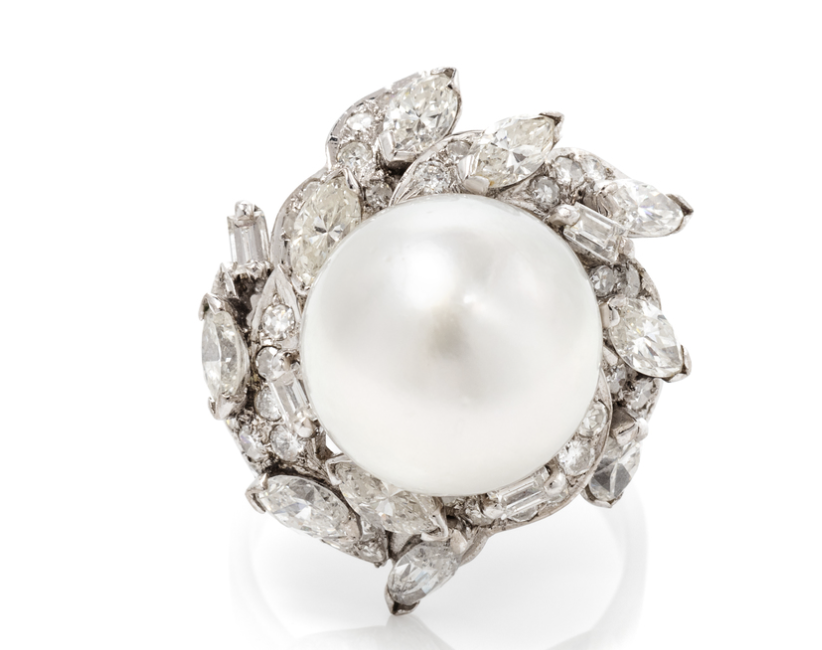
The ring below and the information that follows is a real example of how the definition of "value", and the circumstances surround the purchase or sale of a piece of jewelry result in large variations in price. Case Study: A Lesson in “Value”
Careful evaluation of stone quality, nature, color and clarity as well as thorough measurements were taken. Metal was tested and the manufacture and metal quality hallmarks were researched. Through this process some additions and changes were made to the auctioneer’s specifications: Diamonds: 53 individual stones measuring approximately 3.37ctw, Color: I-J, Clarity: VS1-VS2 - larger stones, SI1-SI2 - smallest stones.
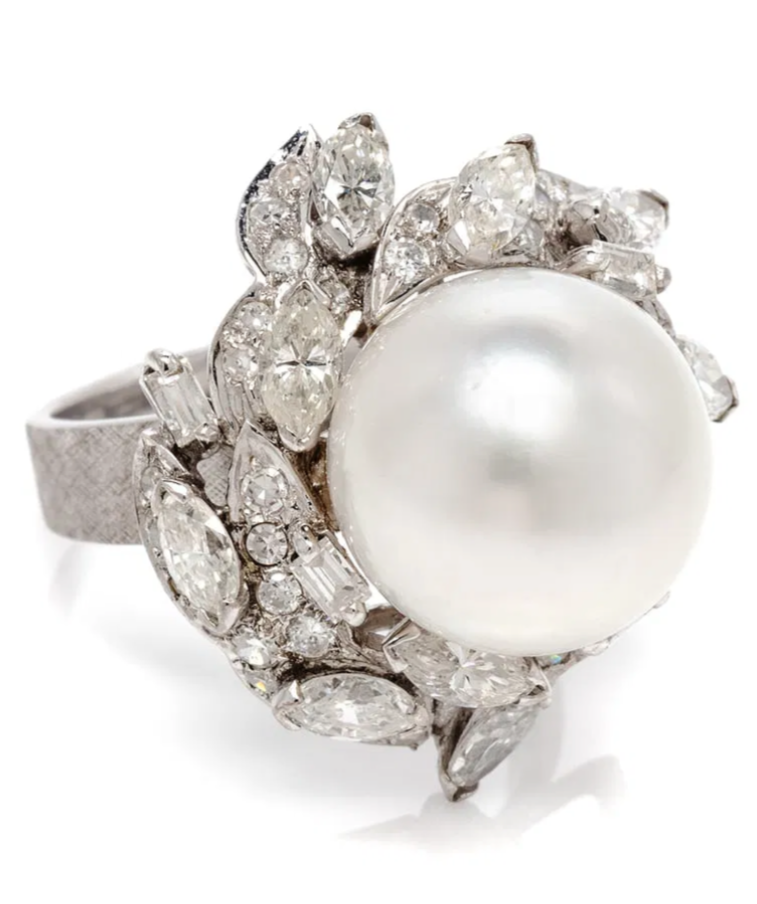
Full appraisal description: One lady's handmade hand-textured (cross-hatch) 14K white gold scattered, spray mid-century, diamond cluster and south sea pearl, cocktail ring with a flat, shank and cathedral setting. The ring is a size 7, is 1.30 mm thick and measures approximately 4.70 mm tapering to 3.80 mm in width by 17.00 mm in diameter by 35.60 mm in height by 24.40 mm in depth and weighs a total of 7.98 pennyweights. The metal was tested and determined to be 14K white gold. Stamped "14K". The "OP" trademark (or hallmark) can also be found on the item. In good condition.
Orenstein & Perstein: A prominent New York-based jewelry firm active during the mid-20th century. They were known for producing high-quality gold rings, often featuring semi-precious stones or classic mid-century designs. Their pieces frequently carry a simple "OP" or "O.P." alongside the "14K" purity mark.
The Appraisal Summary
The Item Offered for Sale at Auction
A mid-century cultured pearl and diamond ring brought for Appraisal by an owner who purchased the ring at auction in 2025. This ring was advertised as measuring approximately 13.25 mm, with marquise, baguette, round, and single diamonds weighing approximately 1.90 carats total. 14 karat white gold. Ring size 7. Stamp: OP 14K. Gross weight: 8.00 dwt. The ring was purchased for $1000 plus a 28% buyer’s premium, taxes and shipping.
Total Selling Price: $1,280.00, excluding taxes and shipping.
Typically the highest of all valuations. These appraisal values are used by insurance companies to set premium rates for items, in order to cover a potential loss. The reality is that you aren’t likely to get this value from an insurance company if the item is actually lost or stolen. Make sure you have a dedicated rider or separate jewelry policy that specifies you will receive the full insured value for the item.
Insurance Value $8,100
Fair Market Value reflects the price at which property would change hands between a willing buyer and seller, neither under compulsion. This is the value type required for estate settlements, donations, gifts and divorce or other property disputes. This value is closest to what you may be able to sell your jewelry for, if you can wait to find a person who wants the item you have for sale, and intends to keep it as personal property. This ring is not something everyone would wear or want. The faster you would like to sell it, the lower the price will be.
Urgency to sell drives Liquidation Value. Interestingly, this value is very close to the value paid by the purchaser at auction in this example. An important item to note though is that the person who sold their item at Auction did not receive the full price. The auction house gets 100% of the buyer’s premium and 10-20% of the “hammer price.” In this example, the auctioneer likely netted $480 of the sale, leaving $800 for the owner. It is possible that the owner had to also pay for evaluation, storage or other fees as well.
This is also the likely offer range to a seller from a jewelry/gold buyer or estate seller for this item, which would be 60-80% of current melt value for the weight of the gold, plus a payment factor for the gemstones.
Liquidation Value $800-1,200
Retail Value (100%): The price you would pay at a high-end jewelry store for a brand-new, similar item. This includes high overhead, marketing, and profit margins.
Insurance Appraisal (~110-120%): Often higher than retail to account for inflation and the cost of custom-recreating a one-of-a-kind vintage piece.
Fair Market Value (30-50%): The "middle ground" price for a private sale between a willing buyer and seller.
Liquidation Value (15-25%): What a jeweler or pawn shop would pay you in cash immediately (often just the "melt" value of the gold plus a small premium for the gems).
Overview of “Values” Relative to One Another
Value Possibilities
In the high-end antique and vintage market, rings of similar quality, size, diamond weight, pearl size and design sell for less than the insurance value. The cost reflects not just the components of the item, but the administrative and operating costs of the sellers. The willingness of a retailer to hold onto an item while it sells, also adds to the price they charge.
Retail Value $6,700
Fair Market Value $3,000